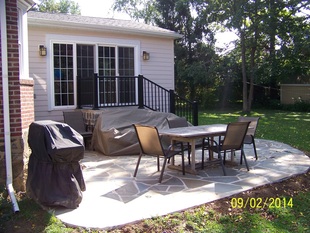
Two months of my hard work = Many years' client enjoyment
| Hey folks! Remember me? I used to run a successful hardscaping and landscape construction company before making the decision to return to school and pursue my teaching certificate? Well I’m back. Sort of. Just to recap, I’ve been going to school full-time taking graduate level classes in pursuit of my PA teaching certificate. I was taking classes full-time through the end of June, and just recently started back up with fall term classes. |
That left me just under two months to squeeze in two family vacations, and – you guessed it -- an awesome patio project that I wrapped up just in time for the clients to enjoy a Labor Day weekend party.
With a full plate of school work, teaching and family life, my original plan was to take on a series of small projects over the summer break that could easily be completed with no crew. But when a prospect came calling with a full-on patio project, for which all the work fell directly in my sweet spot, well, it was hard to pass up. And just like that, my summer was booked.
With a full plate of school work, teaching and family life, my original plan was to take on a series of small projects over the summer break that could easily be completed with no crew. But when a prospect came calling with a full-on patio project, for which all the work fell directly in my sweet spot, well, it was hard to pass up. And just like that, my summer was booked.
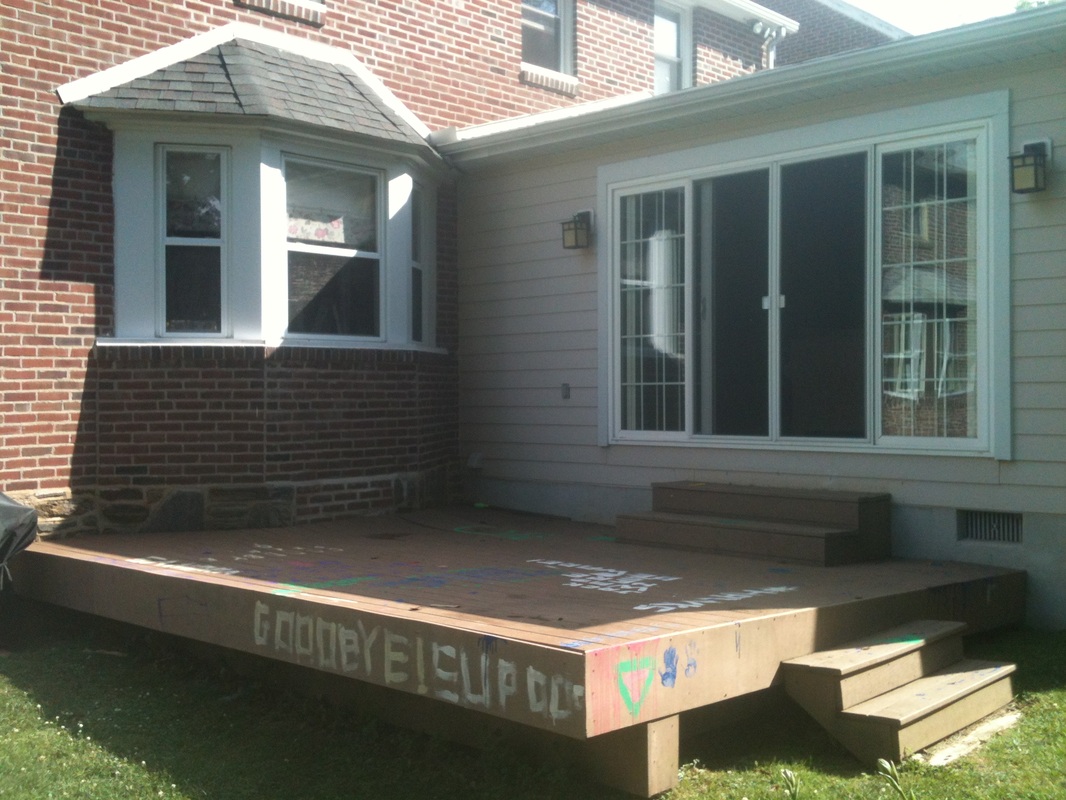
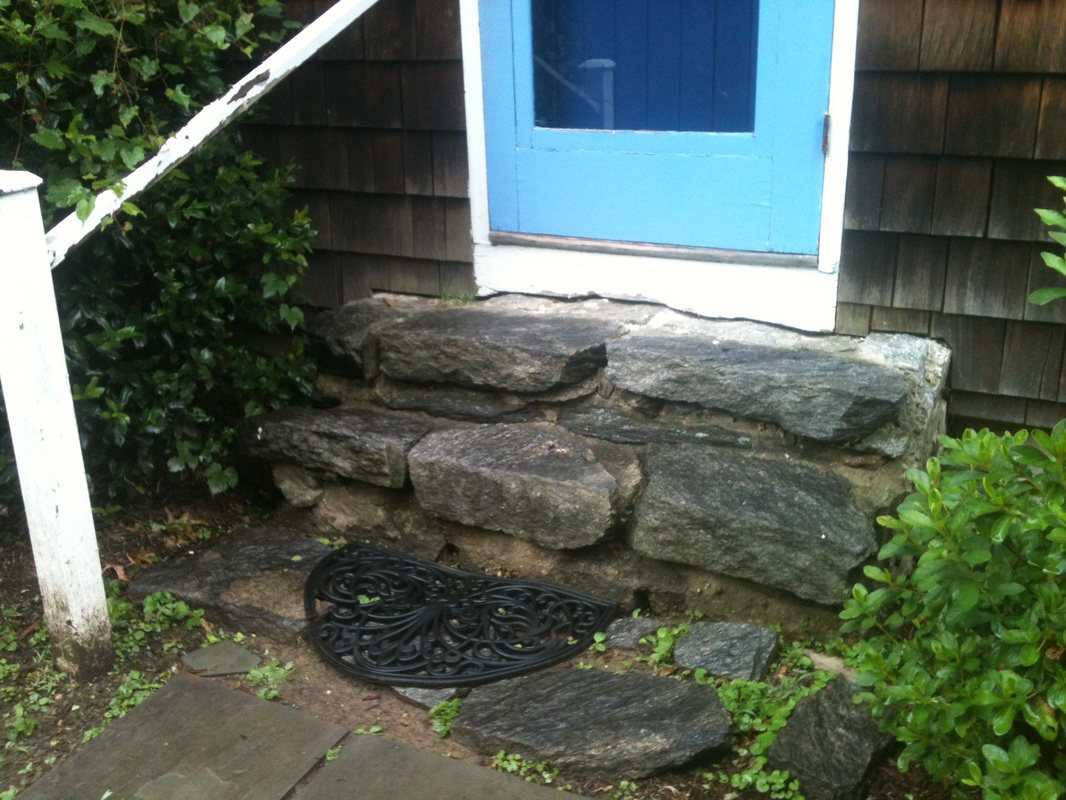
"Before". The original deck just before demo.
| 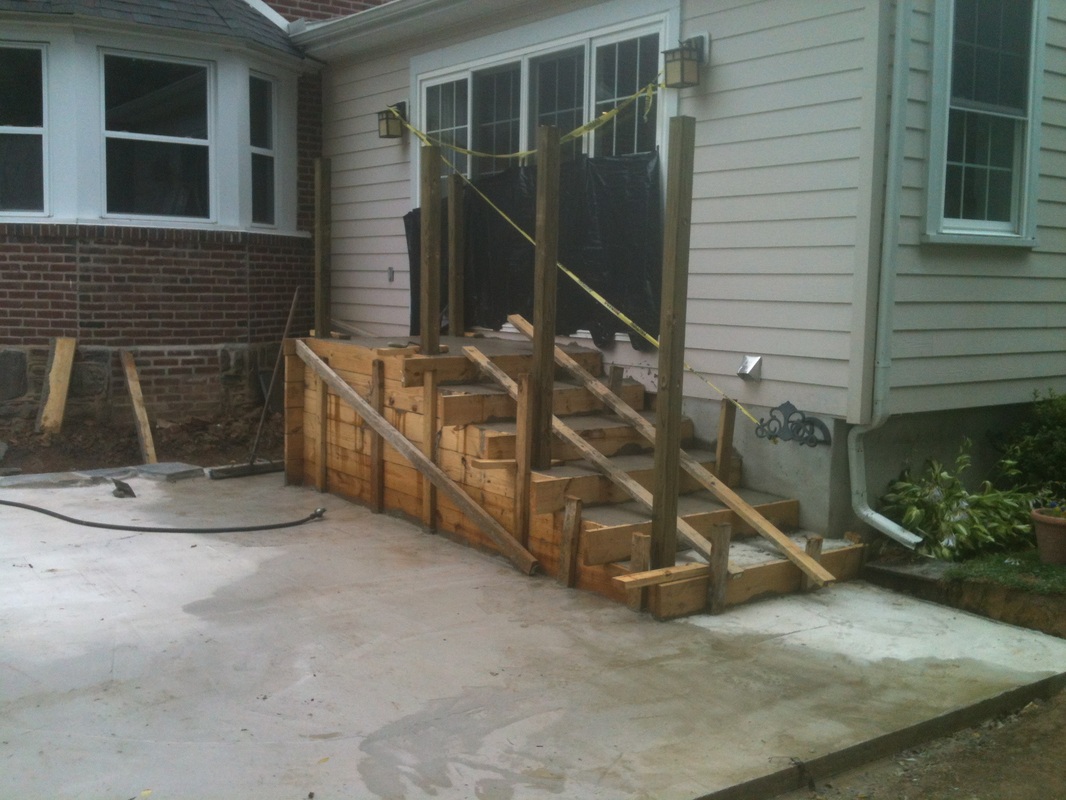
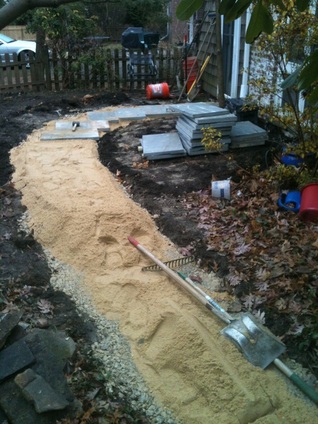
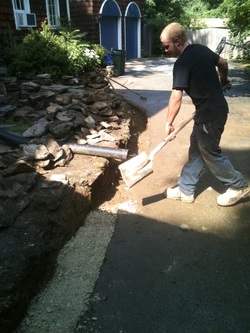
The completed rough pad, just as the steps are poured.
|
It had been at least five years since I undertook any big projects without any labor help, so I was a little curious, for lack of a better word, how this 44-year-old body would respond. Proud to say, I still got it!
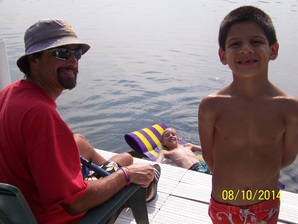 Did I mention I was still able to squeeze in vacation?
 The clients were great. I gave them the full run-down of my situation -- downsizing the business, working summers only, one-man show, working around previously scheduled vacations, etc. Despite my honesty, they still wanted to go with me, explaining that I had been highly recommended by a previous client. As long as the work was completed by the fall, they were 100 percent on board.
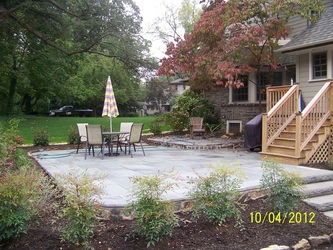
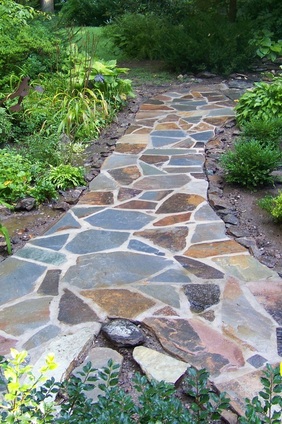
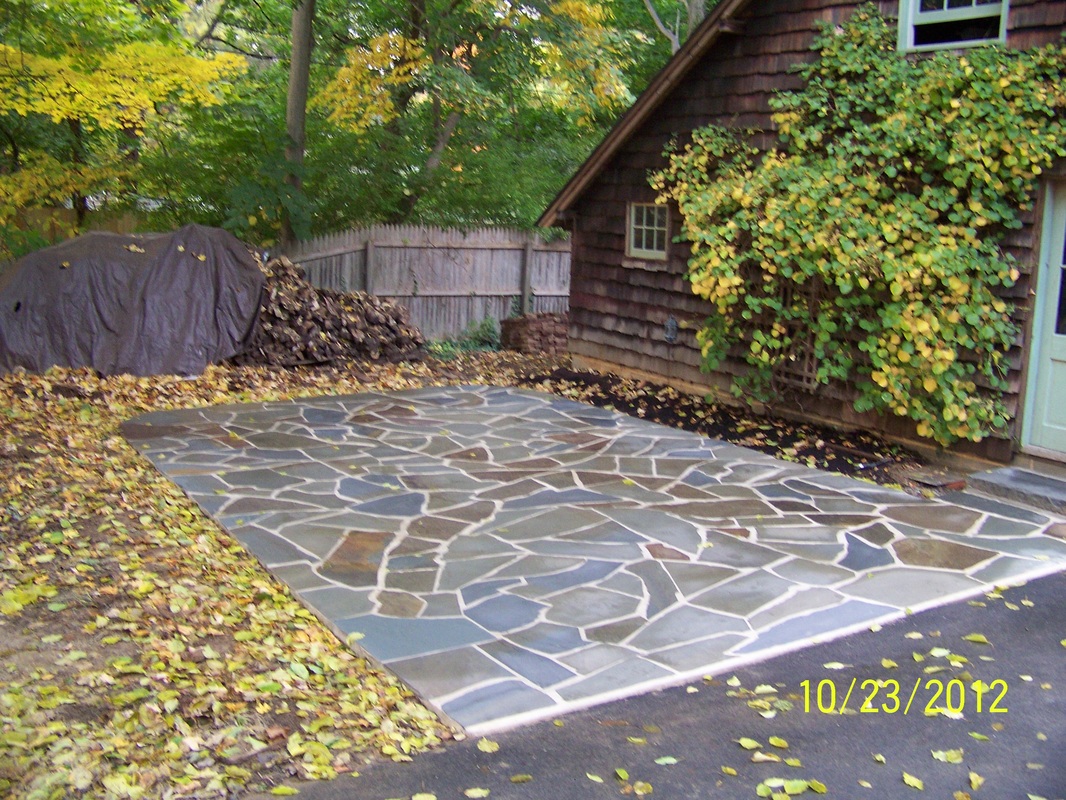
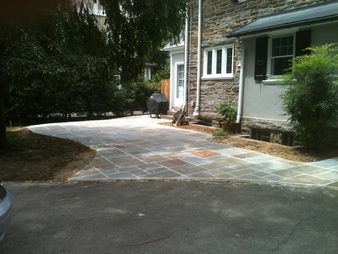
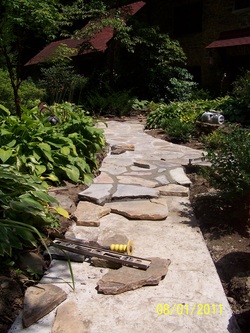
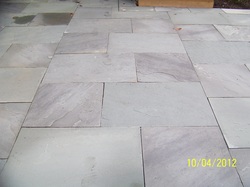
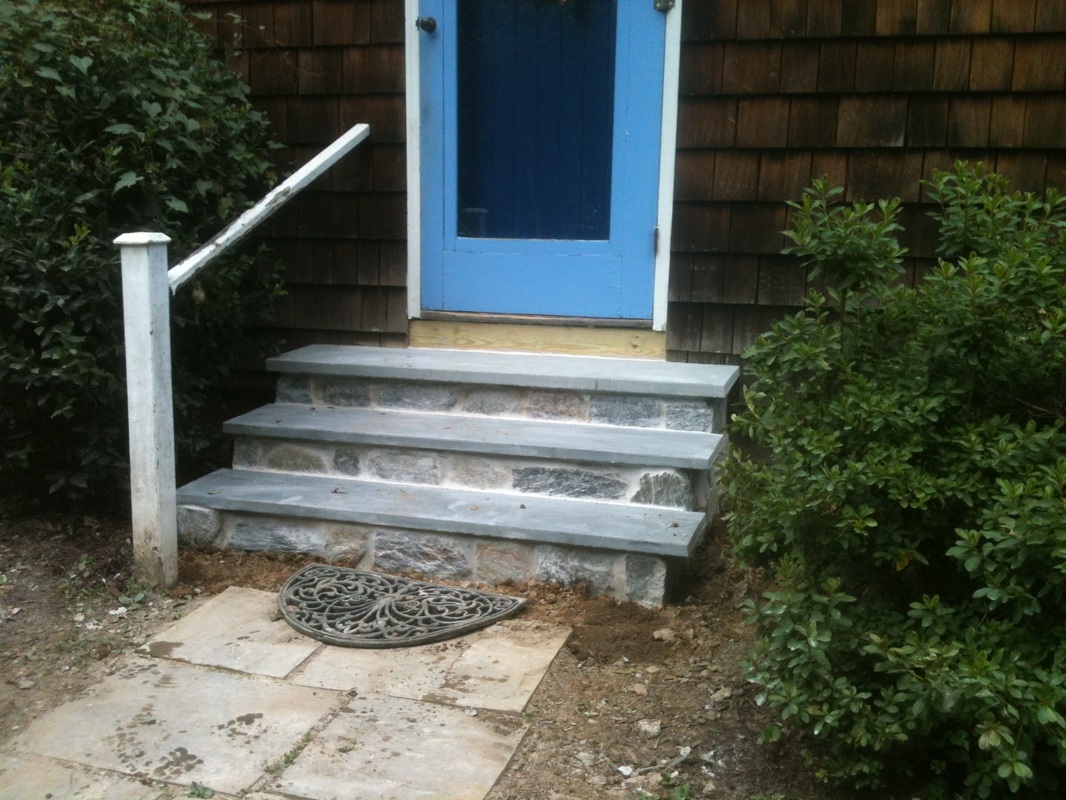
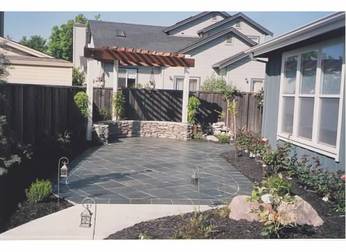
As for the project itself, it included removing a very poorly installed deck that was sagging and pulling away from the house, and installing an approximately 450 square feet wet-set irregular shaped flagstone patio. It was also necessary to install a set of steps and landing to accommodate the rear entrance, approximately 42” off grade.
As for the project itself, it included removing a very poorly installed deck that was sagging and pulling away from the house, and installing an approximately 450 square feet wet-set irregular shaped flagstone patio. It was also necessary to install a set of steps and landing to accommodate the rear entrance, approximately 42” off grade.
Demo work started the last week in June just as I was completing my spring classes. Foundation was poured the week after the Fourth of July, and the rest of my summer was spent cutting and mortaring stones, short of a week in Memphis to visit the wife’s side of the family, and a week kicking back amidst the lakes of Northern Michigan.
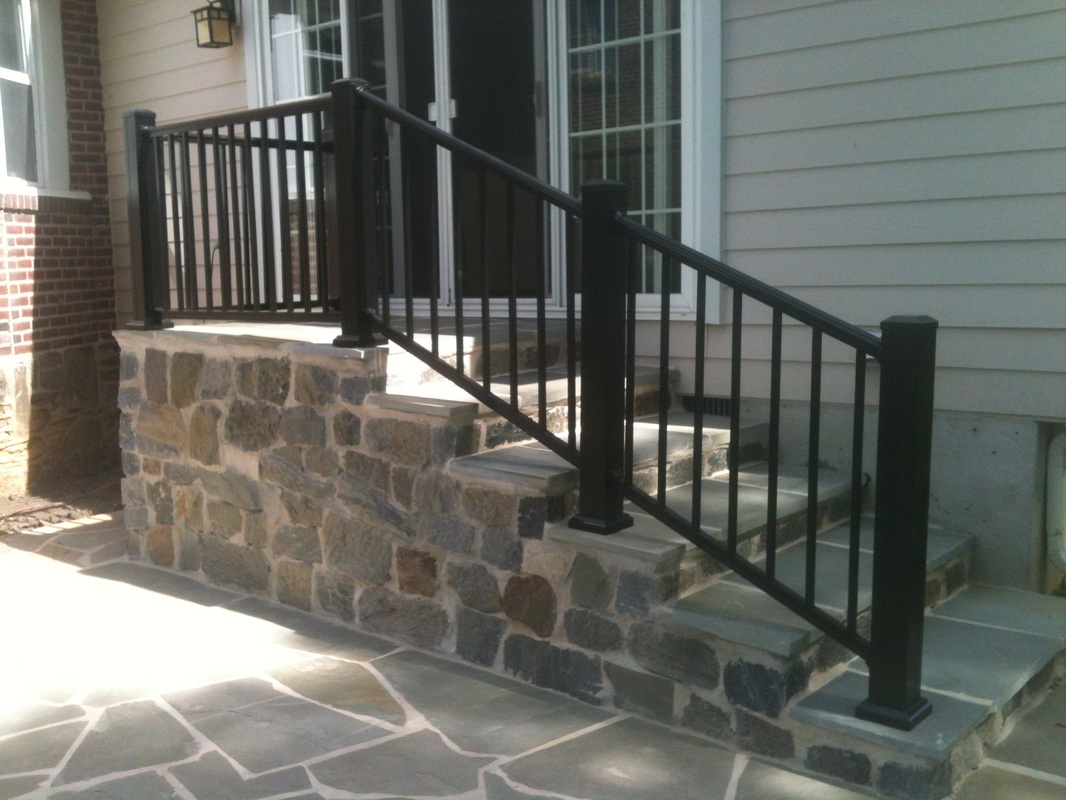
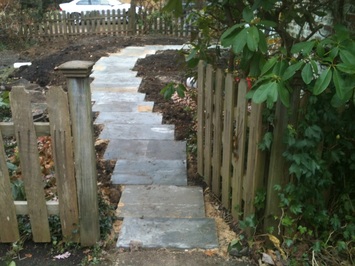
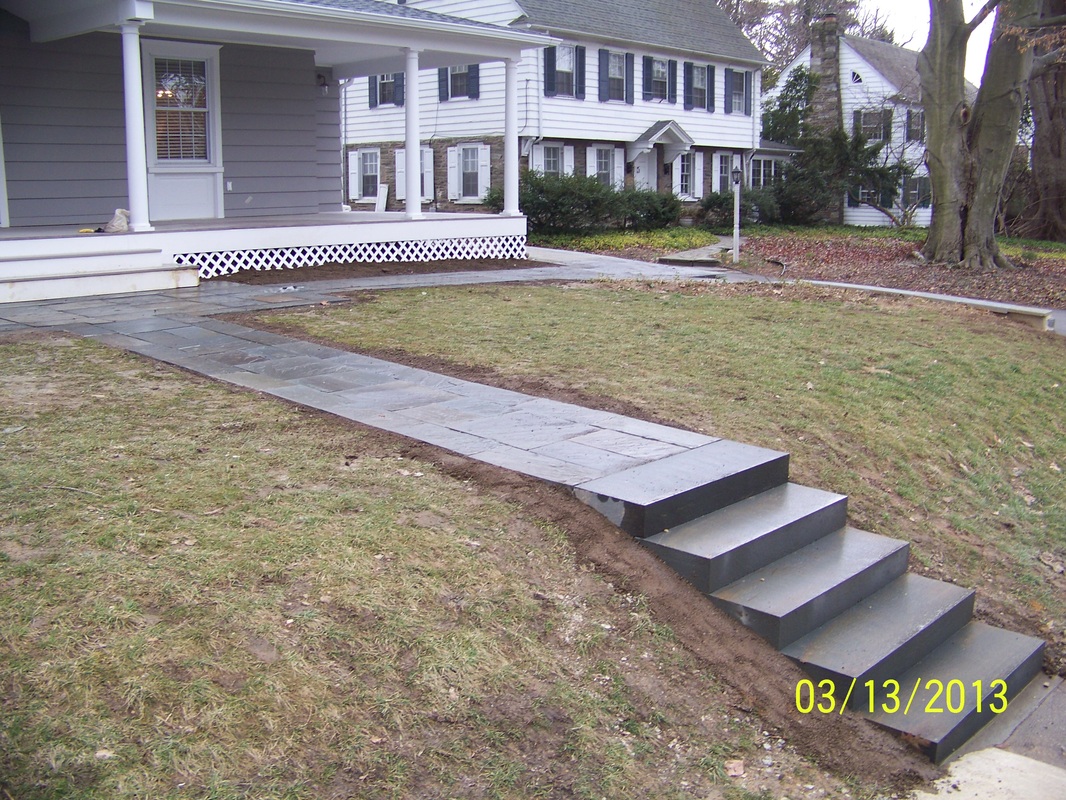
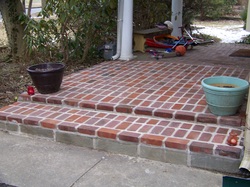
The finished landing and steps
| 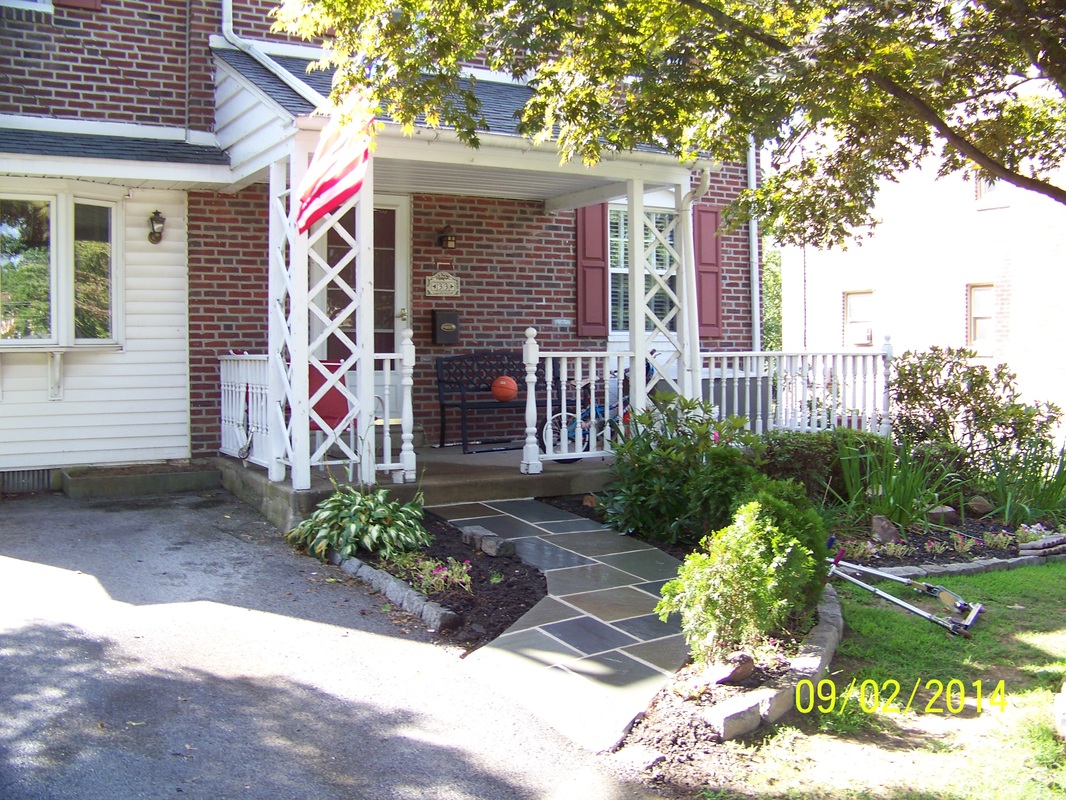
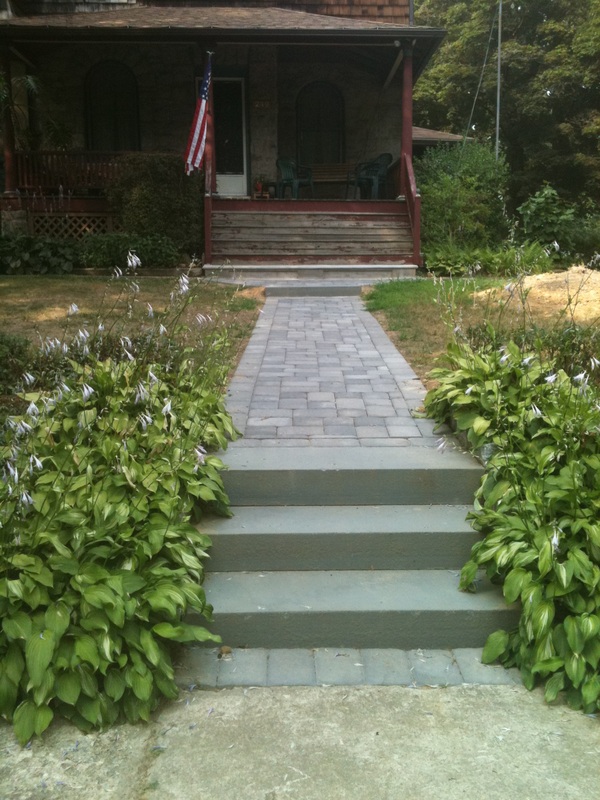
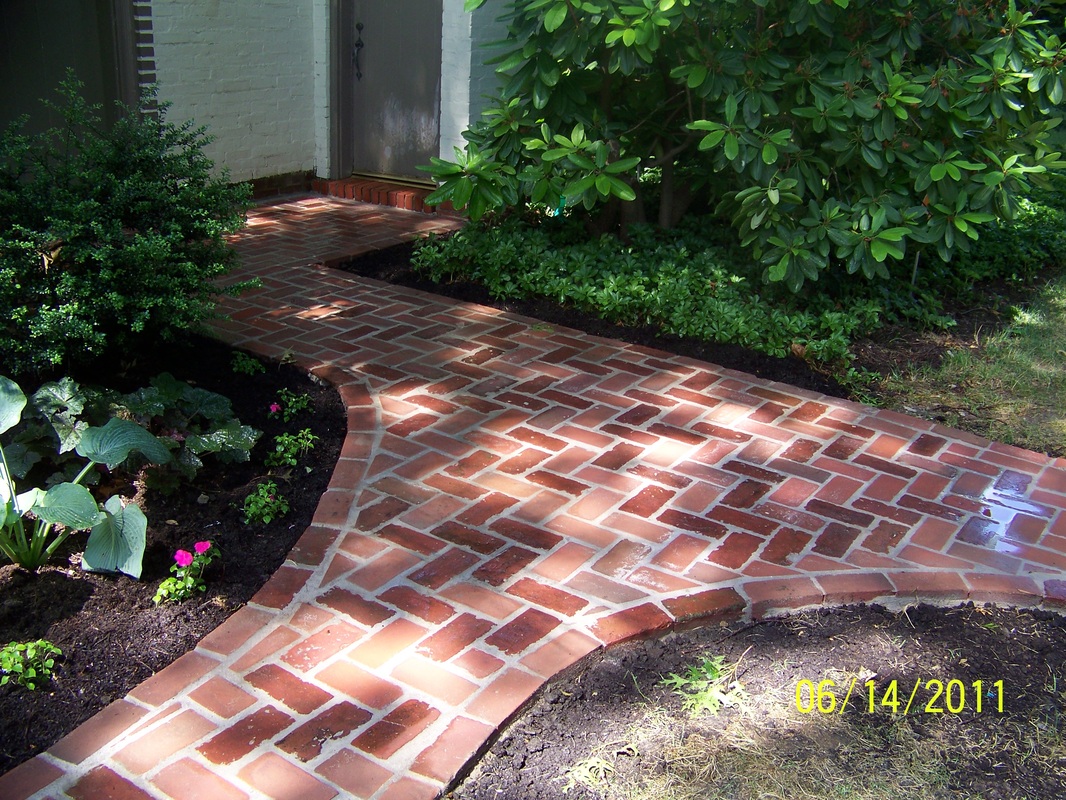
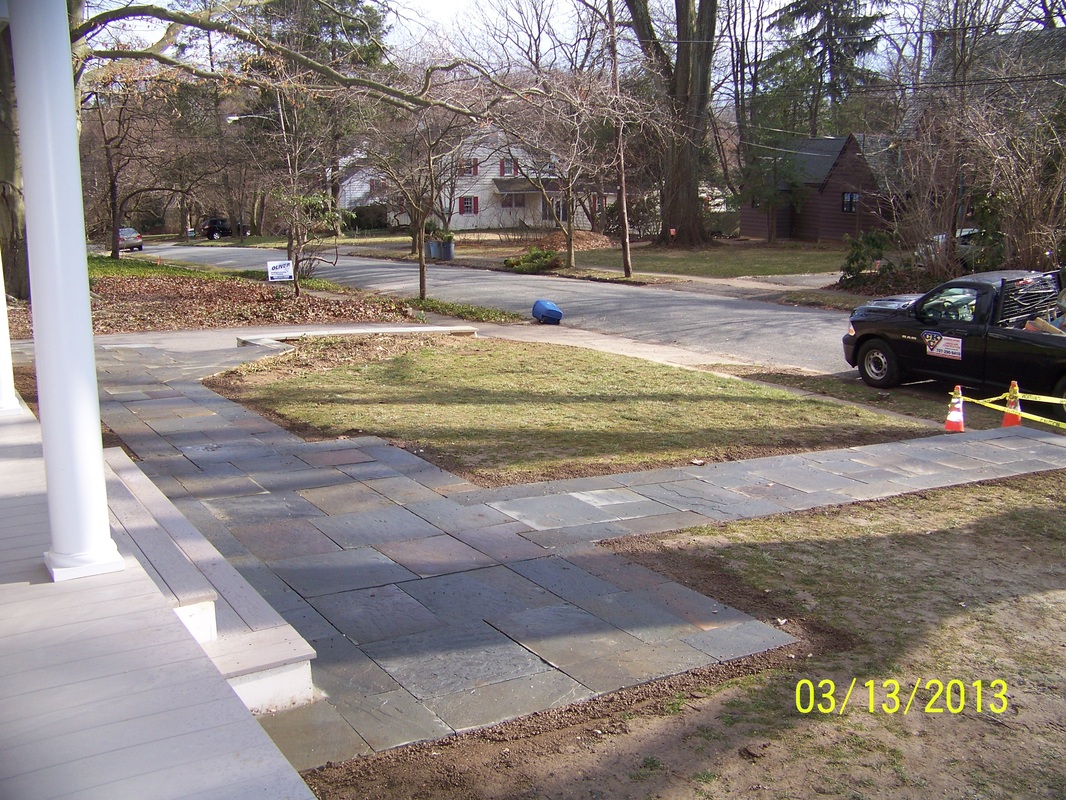
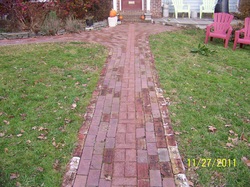
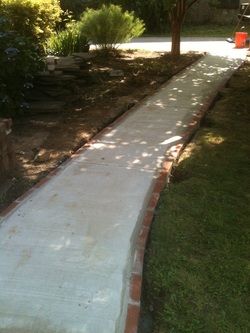
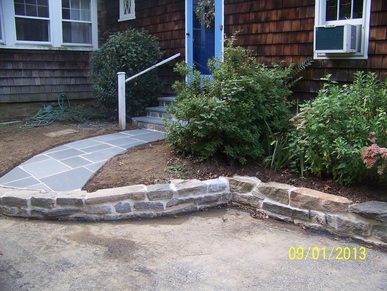
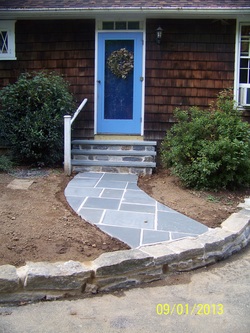
The new front pathway
|
The client liked the work so much, they even added a small front pathway replacement to the overall project scope. And everything was wrapped up the Friday before Labor Day weekend, just in time for the client to have a bow-breaking party over the long Holiday weekend.
Happy client, busy summer, big project, able body. Proud to say, it was a very good summer. Now it’s back to classes and teaching as the school year has begun. I still have a few small projects that I plan to squeeze in on a few days off here and there through the fall. But mostly its school and classwork from here on out. Definitely good to keep in touch with my roots though.
Time to get back to work.
Happy client, busy summer, big project, able body. Proud to say, it was a very good summer. Now it’s back to classes and teaching as the school year has begun. I still have a few small projects that I plan to squeeze in on a few days off here and there through the fall. But mostly its school and classwork from here on out. Definitely good to keep in touch with my roots though.
Time to get back to work.





 RSS Feed